
The Crimson Lens
A complete guide to photographing
Your wedding day is a celebration of love, family, faith and tradition. From the emotional moments of your Nikah to the joy of celebrating with your closest friends and family, every part of a Muslim wedding tells a unique story.
Choosing the right Muslim wedding photographer is about more than simply taking beautiful photographs. It's about finding someone who understands the importance of your traditions, respects your religious values and captures the genuine emotions of your wedding day.
At Crimson Lens, we believe your wedding photography should feel natural, authentic and timeless. Our documentary-inspired approach focuses on capturing the moments that matter, allowing you to relive the atmosphere and emotions of your wedding for years to come.
In this guide, we'll explore everything you need to know about Muslim wedding photography, from your Nikah ceremony to choosing the right photographer in London.
What Is Muslim Wedding Photography?
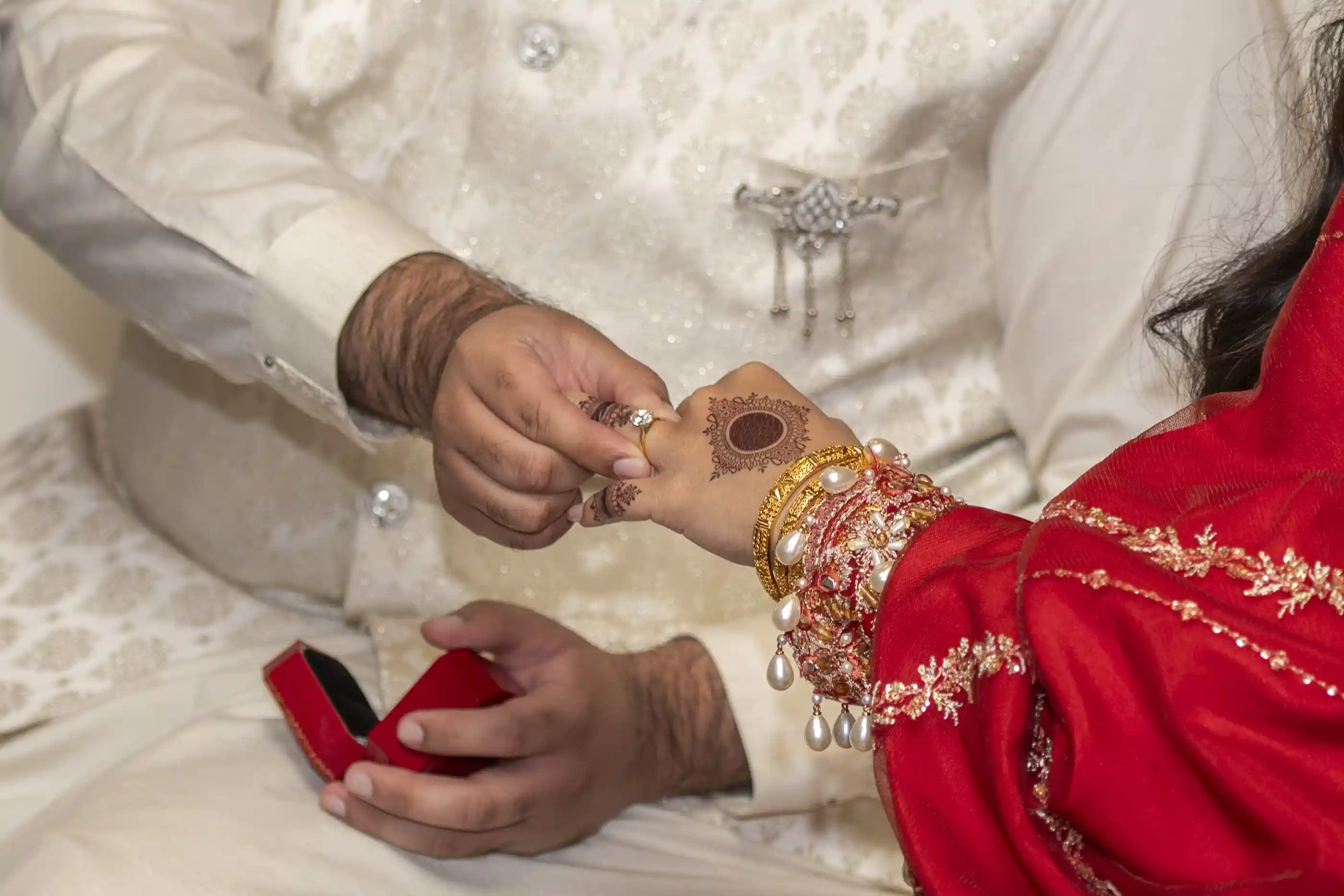
Muslim wedding photography involves documenting the key moments, traditions and celebrations that make up a Muslim wedding. Depending on the couple's culture, family traditions and personal preferences, this may include the Nikah ceremony, bridal preparations, family portraits, couple portraits, the reception and a variety of cultural celebrations.
Every Muslim wedding is different. Some couples have an intimate Nikah followed by a larger reception, while others celebrate over several days with multiple events.
A good Muslim wedding photographer takes the time to understand your plans and ensures that the photography reflects your individual story.
Understanding the Nikah Ceremony
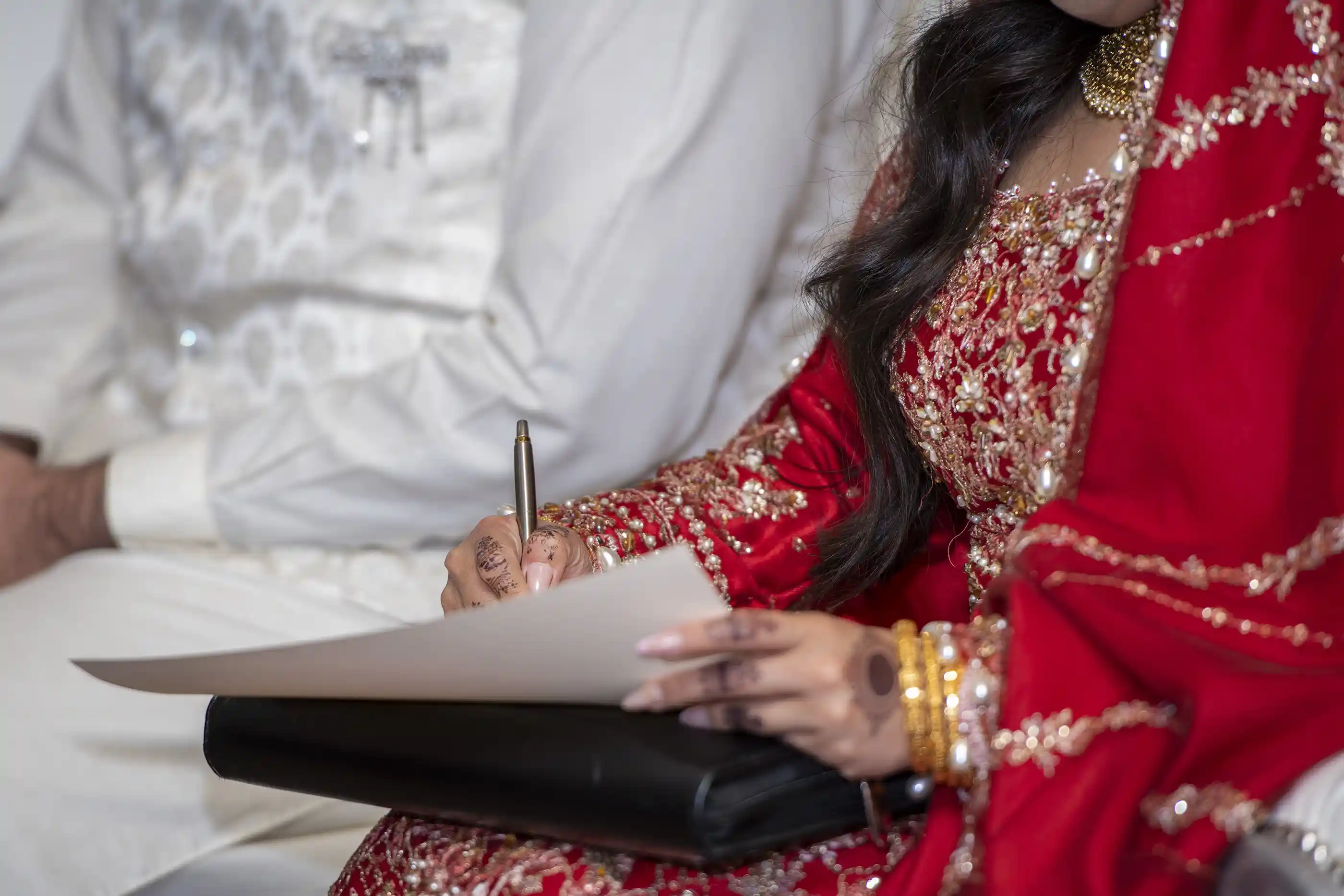
The Nikah is the Islamic marriage ceremony and one of the most meaningful moments of a Muslim wedding. It is during the Nikah that the marriage contract is agreed upon, with the details and customs varying according to the couple's circumstances, cultural background and religious traditions.
From a photography perspective, the Nikah can include several important moments, such as:
- The arrival of the bride and groom.
- The Imam performing the Nikah.
- The signing of the marriage contract.
- Emotional reactions from parents and family members.
- Prayers and other meaningful religious moments.
- The first photographs of the newly married couple.
- Family celebrations following the ceremony.
Your photographer should understand that the Nikah is a religious occasion and should always follow the guidance and wishes of the couple, their families and the officiant. Some couples may have specific preferences regarding photography during prayers, the marriage contract or other parts of the ceremony. Discussing these preferences in advance helps ensure that your photographer can document the day respectfully.
What Makes Muslim Wedding Photography Different?
Muslim weddings often combine religious traditions, cultural celebrations and large family gatherings. This creates a wonderful variety of moments to capture, but it also means that your photographer needs to be organised, observant and adaptable.
Respect for Religious Traditions
A Muslim wedding photographer should take the time to understand which parts of your wedding can be photographed and which moments should remain private. Whether your ceremony takes place in a mosque, wedding venue or private setting, communication with the couple and the relevant family members is essential.
Understanding Cultural Traditions
Muslim weddings can incorporate a wide range of cultural traditions, including South Asian, Arab, African, Turkish and many other customs.
From intricate bridal outfits and henna celebrations to traditional entrances and lively receptions, these details help tell the story of your wedding.
Your photographer should be open to learning about your traditions rather than assuming that every Muslim wedding follows the same format.
Capturing Large Family Gatherings
Family is often at the heart of a Muslim wedding. With extended families and multiple generations coming together, group photographs can be an important part of the day. A little planning goes a long way. Preparing a list of essential family photographs in advance helps your photographer organise group shots efficiently, leaving more time for you to enjoy your celebrations.
Photographing Naturally
Not everyone feels comfortable posing in front of a camera, and you shouldn't have to spend your entire wedding day doing so. Documentary-style photography focuses on real moments: a parent seeing their child in wedding attire for the first time, laughter between friends, a quiet moment between the newlyweds or the excitement of the reception. These genuine interactions often become the photographs you'll treasure most.
What Moments Should Your Muslim Wedding Photographer Capture?
Your wedding photography should reflect the way your day unfolds. While every wedding is different, here are some of the moments you may want to consider.
Bridal and Groom Preparations
The hours before the ceremony are filled with anticipation and emotion. These photographs can include:
- Details of your wedding outfits, jewellery and accessories.
- The bride's hair, makeup and finishing touches.
- The groom getting ready with friends or family.
- Gifts, invitations and meaningful personal details.
- Candid moments with parents, siblings and loved ones.
These quieter moments help tell the full story of your wedding day.
The Nikah Ceremony
Depending on the photography guidelines agreed upon beforehand, your photographer may capture the setting, guests, important details and emotional reactions throughout the ceremony. It is always important to respect the wishes of the couple, the officiant and the venue.
Family and Group Photographs
Family photographs are an important part of many Muslim weddings. Consider preparing a list of essential combinations, such as:
- The couple with both sets of parents.
- The couple with their siblings.
- The couple with grandparents.
- Immediate and extended family groups.
- Special photographs with close friends.
Having a designated family member help gather people can make these photographs much quicker and easier.
Couple Portraits
Your couple portraits are an opportunity to slow down and enjoy a few moments together. Whether you prefer elegant photographs at your venue, romantic portraits outdoors or relaxed candid images, your photographer should help you feel comfortable rather than forcing you into poses that don't feel natural.
Look for suitable areas within your local area, beautiful portraits can be created in a variety of settings, from elegant wedding venues to outdoor locations with interesting architecture and natural light. You may need a photography permit in certain locations.
The Wedding Reception
The reception is often full of energy, laughter and celebration. Depending on your plans, your photographer may capture:
- The wedding décor and table settings.
- The couple's entrance.
- Speeches and heartfelt reactions.
- Family and friends enjoying the celebrations.
- Traditional performances or cultural customs.
- Dancing and spontaneous moments of joy.
- The couple's final moments of the evening.
These photographs help preserve the atmosphere of your celebration, not just the formal events.